
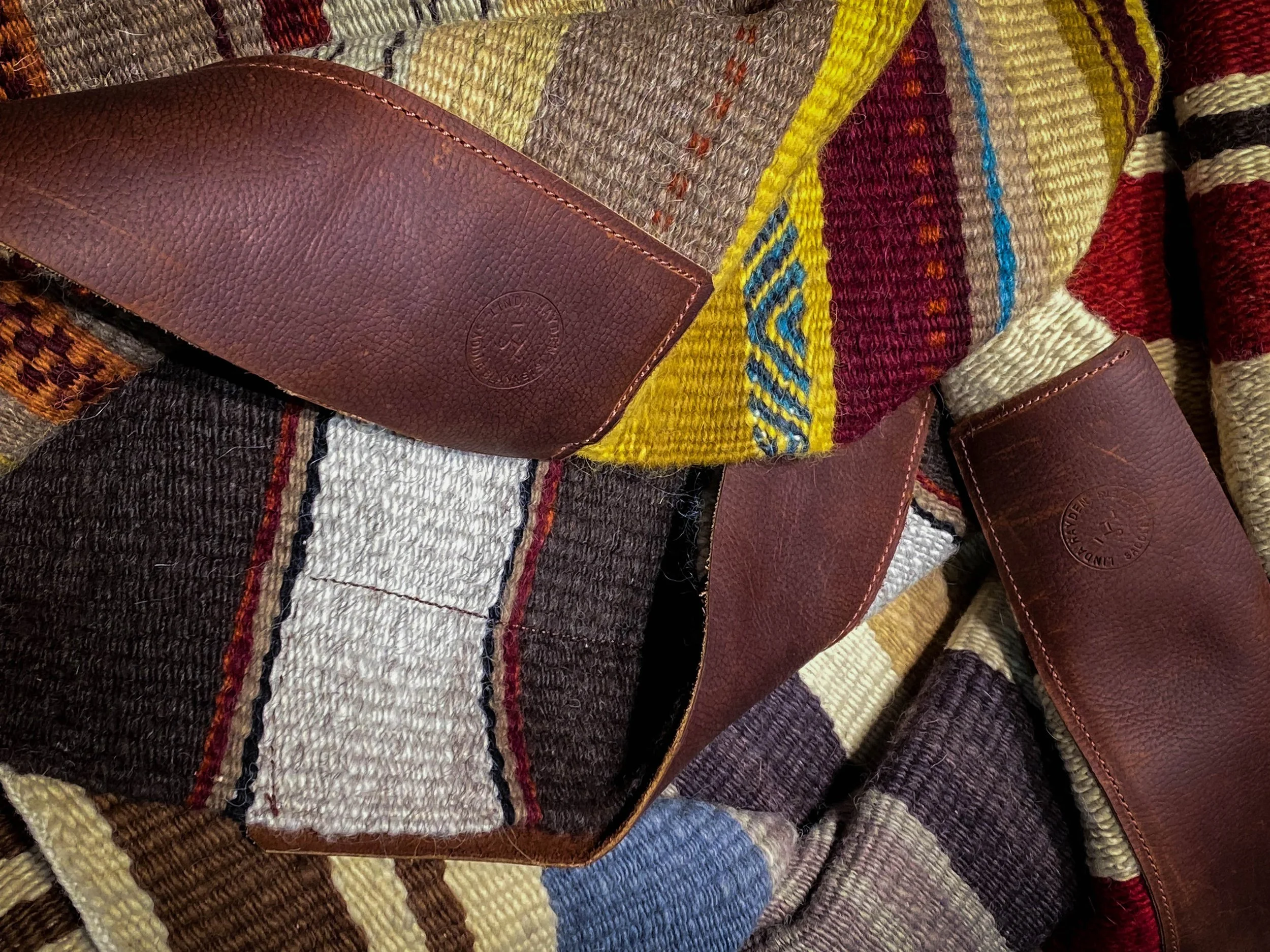
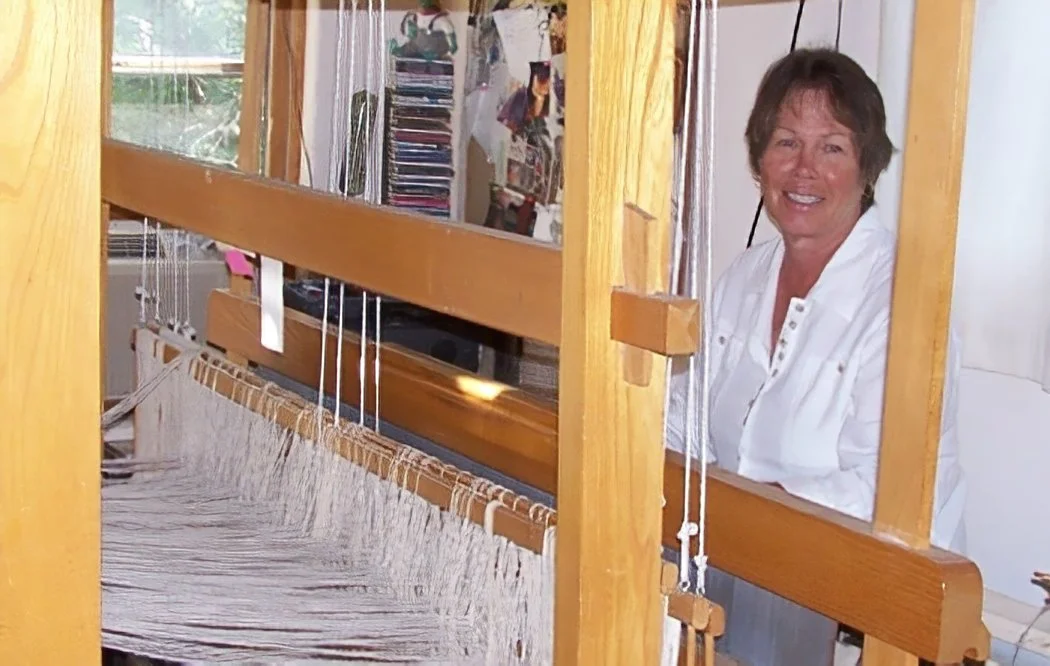
Linda Hayden lives high above the Central San Joaquin Valley of California in the foothills of the Sierra. She and her husband, Joel, and son, Russ are cattle ranchers on the South Fork of the Kaweah River near the small community of Three Rivers, gateway to Sequoia National Park. It is here in this beautiful area that Linda collects the natural materials she uses to dye her handspun wool and create her all natural saddle blankets. Linda grew up in the Salinas Valley of California where she was greatly influenced by some of the best horsemen in California. Her interest and love of traditional horse gear started at an early age and with it came her desire to create saddle blankets similar to those of the Navajo Indian. She has been weaving for 46 years and this desire to weave the traditional wool saddle blankets has taken her to studies in Colorado and New Mexico where she concentrated on the Navajo and Rio Grande methods of weaving.
In 1994 Joel and Linda sold their ranch in the Salinas Valley and moved to Three Rivers. It was at this time that Linda started concentrated on showing her blankets in western art and gear shows. Since that time she has exhibited in Elko, Nevada, Sheridan and Cody Wyoming, Fort Worth, Texas, and numerous shows in California. She has customers through out the U.S., Denmark, England and Italy.
We recommend using a computer for the best viewing experience.When using a mobile device, we recommend turning the device sideways for the best view.
“Maynard Dixon”
A large double blanket measuring 64 × 35 inches. This size is popular with cowboys who ride long distances and want extra protection for their horses' backs. This is also a popular size for home decor, being displayed on chairs, couches, and at the end of beds. All the colors come from plants Linda has collected on her family ranch and in her many flower gardens. The rust colors come from acorns and oak galls. The red comes from rock lichen and cochineal insects. The yellow shades come from sunflowers, daisies, and hollyhocks, the blue from her indigo gardens. The tans, browns, and greys are natural churro sheep colors.
$4,000
“Kurt Markus”
$2,000
“Carl Oscar Borg”
$2,000
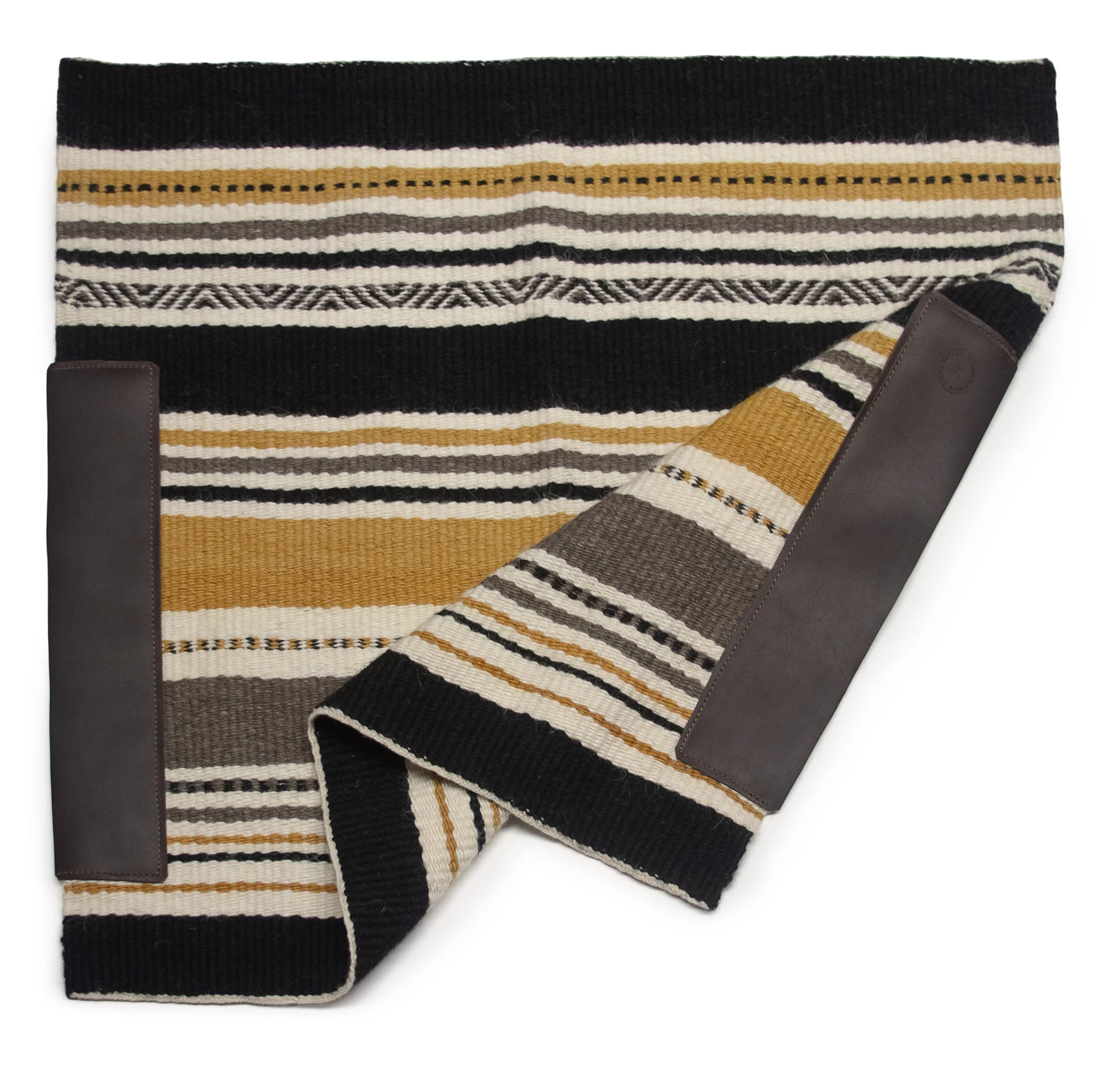
The classic weaving period of Navajo blankets was from the 1690s to 1800, when the original Navajo weavings were made from handspun Navajo Churro wool. This wool accounted for the long-wearing and luster of the finished product. Churro wool has remarkable durability. Navajo churro wool remains the most sought-after wool for traditional Navajo weavings, which is why Linda uses it exclusively for her saddle blankets. Many blankets today are made from cotton and do not last long, and are not good for the horse's back. Each blanket Linda weaves is made from churro wool she spins and dyes before moving to her large floor looms to create her one-of-a-kind blankets. The churro sheep produce many beautiful natural colors ranging from a variety of greys, browns and tans, cinnamon and reddish browns and their beautiful white.
“Edgar Payne”
This is a classic 1940s Navajo design with a more modern twist. This blanket is woven of 100% Navajo Churro sheep wool, hand-spun by Linda. She tightly spins the wool to make it extra strong. The cream and brown colors are both natural sheep colors, and the red comes from the cochineal insect, which is gathered off the cactus plants in Mexico. The insects are soaked, then simmered to bring out the lovely red, and then the wool is soaked for two days and simmered in this dye bath to make the beautiful red. This is a heavy blanket made to last for generations.
$2,000
“Jay Dusard”
$2,000