
W. Truman Hosner | On Being Driven and Artistic Growth
/Pastel Society of the West Coast
by Pamela Comfort
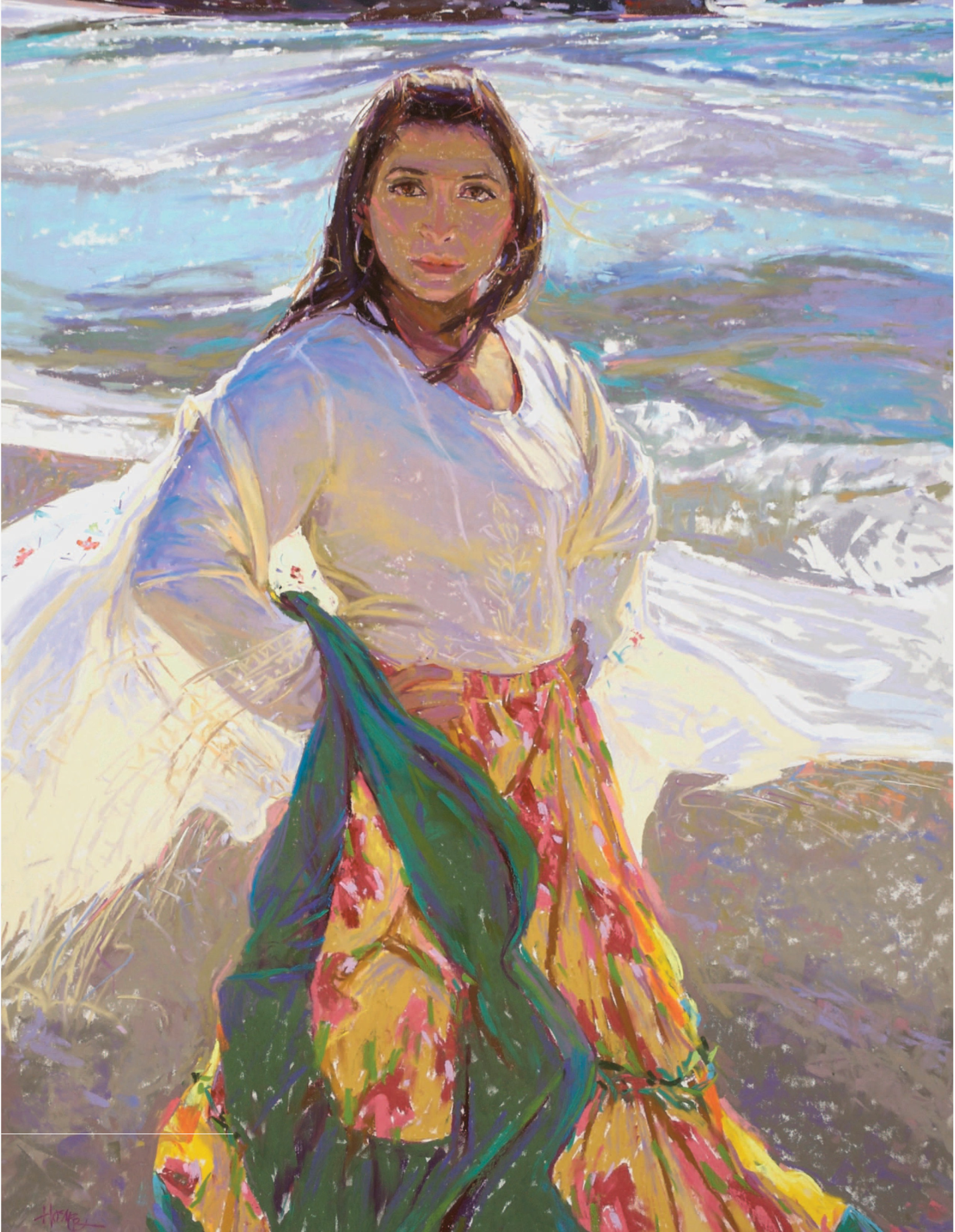
“Español” 26×20″
Margaret DeDecker, whose gallery carries Truman’s work says of him, “Bill wears his charm on his lapel” and “his chivalry is omnipresent.” She refers to his paintings as “framed poetry.”
Truman jokes with me that he had to give “Maggie” great sums of money to say that. I find Truman to be an engaging conversationalist, willing to share some of the lesser known background and experiences that have contributed to his great success as an artist and instructor. It’s evident that Truman’s achievement and his art reflect very deliberate and analytical study and preparation, paired with an intense passion and ded-ication to authentic creativity.
Tell us about your upbringing, were there artists in your family or others who inspired you to become an artist when you were young? You grew up in Detroit, correct?
Yes, born at Harper Hospital, which is now part of a big-ger Detroit medical complex, but, my parents first moved to St. Clair Shores, and then moved about a year later. My mother was from a farm in Nebraska and she had an unfortunate thing happen as a young child. Her father and mother wanted to ranch. Her father was very good at training horses, and he had been bringing in train car loads of horses and training them and selling them to the farmers for work. They bought a ranch in Montana. In January of 1919 they sold the farm and all of the livestock and implements, and he, against family advice, got on the train to go to Montana to get the deed to the new ranch and caught the swine flu, that was that big other flu pandemic, and in three days was dead.
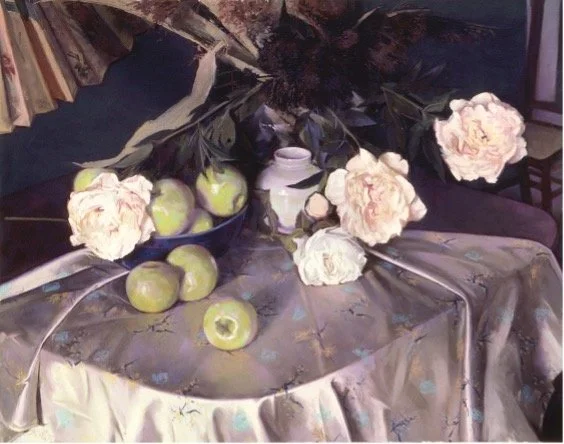
“At Cameron’s Table” 24×30″
So then, my mother and her younger sister, my mother was three at the time, and her younger sister was a new-born—they kind of bounced around the West out there. I think Grandma Mary was trying to find a way to make a living. My mother’s younger sister, when she was three, fell down some stairs at a boarding house and died. At some point, her dad’s brother and his wife brought my mother home to Nebraska, where she spent her forma-tive years. So, she really considered that to be her family. They had a son that she considered to be a brother. After she met my dad, and they married, and they had this newborn baby, which was me, I was the first of three, they found an acre of land just outside of Detroit. My mother built a little garden, a half-acre vegetable garden, and flower gardens, and all these things.
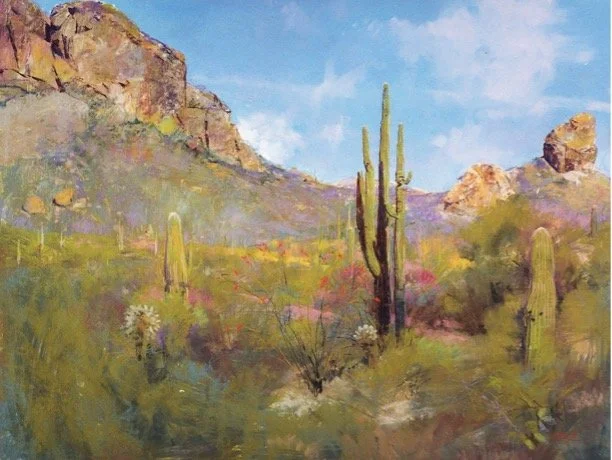
“Desert Spring Suite” 24×30″
My dad worked for the federal government back then as a federal probation officer, but this was at a time when that paid very little. Most of the factory workers around us made more money than he did. My dad made up for it when he retired, though, because by then he was Chief Federal Probation Officer of the Eastern District of Detroit and as the government grew, he got better and better payment, you know, so a good living.
I grew up in that working-class neighborhood in Detroit, where art fell into a far third, behind cars and football. I know of no other artists in my immediate family. I do know that my grandmother on my mother’s side, attended the Chicago Vocal College and sang in the chorus of the Grand Lyric Opera of Chicago during the era of Enrico Caruso. I have a pen and ink drawing of hers that is pretty good…some of that may have trickled down. But it was my mother, a gifted flower gardener, who was most influential and recognized my childhood drawing and painting abilities.
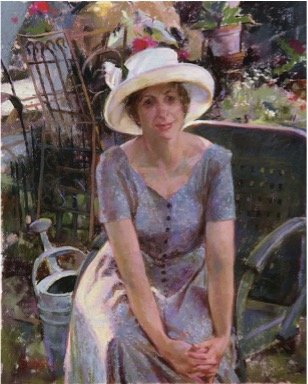
“As her Garden Grows” 14×11″
My mother was very familiar with growing things. She could grow anything, beautiful vegetables, and we had a vineyard and we had all of that. Her flower gardens were works of art, carrying varying designs depending on the time of year and what was in bloom. She also competed in floral arrangement shows and won many awards. It was by observing those arrangements that I learned color and design, and the desire to create. She was quite innovative with her concepts. I still remember some of those arrangements, and thinking, well, you do that with that, and a twist with a twig here, and I thought, that’s really fascinating.
She was a perfectionist. She would often drive my brothers and I hard, but it was very valuable as an artist to have that kind of thing encouraged in me. Then, when I was 11 or 12, mom gave me the complete three volumes of Vincent van Gogh’s letters to his brother Theo. I never knew if it was as a warning or as a guide! I do know, I found a soul who was in sync with the intensity of life I was feeling.
When I read those letters, it was the first time in my life when I really felt that maybe it was okay to feel the way I was feeling towards life, towards people, and things like that, with such intensity. To this day, my middle brother, who’s been very successful in business, says to me, “I don’t get your passion.”
For example, on Wednesday morning at 3:30 in the morning, I got up and left to catch a 6 o’clock flight out of Detroit to come to California. But Monday night be-cause I’d been asked to contribute a painting to a show for the gallery in Colorado that carries my work, I got up at 1:30 in the morning and went out and painted a nocturne from inside my car, for three, three and a half hours. Now, not many people are really interested in doing that. When my brother found out, he said, “You do realize you’re 75, you’re not 50.” I said, “I know, but…I think I still have a few things at the bottom of the cup, so I’m gonna keep painting, yeah.” it’s a passion, it’s not work, you know. And true enough, I can’t do as much of it as I used to, but I still think I have a few sur-prises in me. I’m gonna keep going yet.
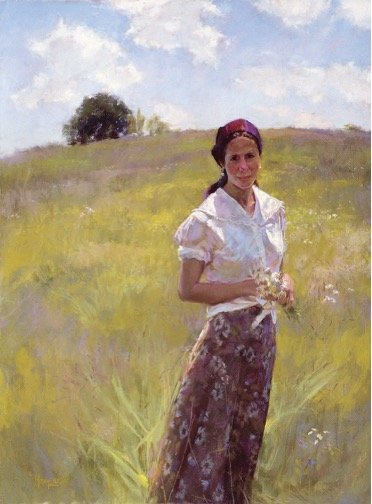
“First Love” 26×20″
Were you interested in art when you were in school, before college?
I was, but as I mentioned, art took a far third in the community I was in, behind cars and football, and things like that. I received a scholarship to a gifted student program at Kansas State University at Lawrence, Kansas when I was a freshman in high school. It was a 6-week program, and there were kids from all over the country gifted in music, mathematics and science, in ballet, art, and all these things, and we all worked together for 6 weeks. I came home and promptly announced that I was giving up art. I was going to go into engineering, some-thing that I could have a chance at making a living at.
So I gave it up, and I went to Western Michigan Univer-sity the first year of college, and just didn’t know what I wanted to do with my life. And I flunked out. That was during the Vietnam War and my college deferment was gone, and I was within 30 days of being drafted. They initiated this lottery business, and fortunately, I had a high number. But the beauty of the lottery was if you were exempted once, then you knew you were okay, you could go and do what you wanted with your life.
So the only other thing that I was any good at, besides American football, was art. And I decided at 18 to take up the study of art. I put myself through Wayne State University, which is a city university. I could live at home. I earned a Bachelor of Fine Arts.
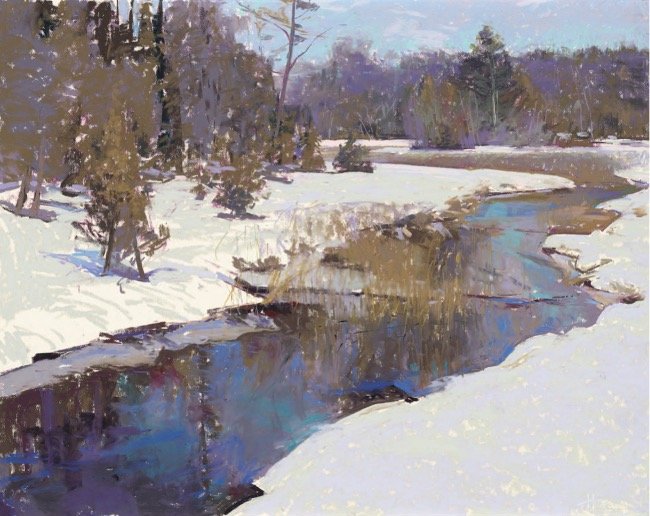
“At the Betsie River” 16×20″
At that point, I was married, and my young wife and I were trying to make a living. The art program that I was in was driven mostly by ex-perimental and ultra-modern and experimental thinking, okay? And the avenue, or path that seemed to appear for making a living was still a couple of 3 or 4 years out, because I needed a master’s degree. I had no more money, so I couldn’t go to school any further at that point.
Did you have another career before you became a full-time fine artist?
Well… after I received my BFA, it took about three years to find my way into a creative venue. During that time, I worked several odd jobs, mostly in factories and grocery stores.
I decided to try and get into commercial art, and I wanted to do illustration, I didn’t want to do graphic design or art direction. I soon discovered that my portfolio was not the right portfolio. My portfolio was designed for me to go on to a master’s program in fine art, and/or eventually teach. And I was competing against these other young artists, some of them were even younger than I was, and they had gone and studied at schools of visual arts in Ohio or New York, and had portfolios designed for graphic arts. They’d have 25 or 30 beautiful graphic art paintings, and I realized, this isn’t going to work.
And then I found out that Detroit had an apprenticeship program in commercial art. So I went to the Center for Creative Studies, and took some night courses. I took everything out of my portfolio except these 6 pieces that I developed. And, luckily, the head of the graphic arts department at the college recognized my ability, and he turned some people in the business on to it, and some-body was willing to take the chance.
And that was my first lesson of where I was going, because I was working in a factory, getting paid pretty good wages per hour with all kinds of benefits and education benefits and all that, and I came into the com-mercial art business at minimum wage, with no benefits, no health insurance, no nothing. The only way I could support Denise and I was to work 70, 80 hours a week to make enough money. But I did it. When everybody else would go home at the end of the day or on week-ends, I would go back in and I would develop portfolio pieces to try and advance myself. Eventually another advertising art studio saw my work and offered me a job as a junior illustrator.
Now a successful illustrator, I was able to go freelance after 5 years. I eventually ended up teaching illustration in the Center for Creative Studies program.
Have you or do you work in other media? What led you to pastels?
As an illustrator I worked in all the mediums. Towards the end I developed an illustrative style in which I used pastels for the brilliance of their color. Then, when I transitioned into fine art, I made a clear decision to use pastels exclusively. That’s all I’ve used since 1995.
I feel I have had two careers in art. Illustration was my first career. Then in the early 90s I left that field to pursue fine art and a newly discovered passion for plein air painting with pastels. I’ve been asked, “How do you make a transition like that?” I said, it’s a leap of faith. That’s all it is. I gave myself 5 years, and I said, if I’m not making enough money to stay afloat, then I’ll do something else, but I was lucky.
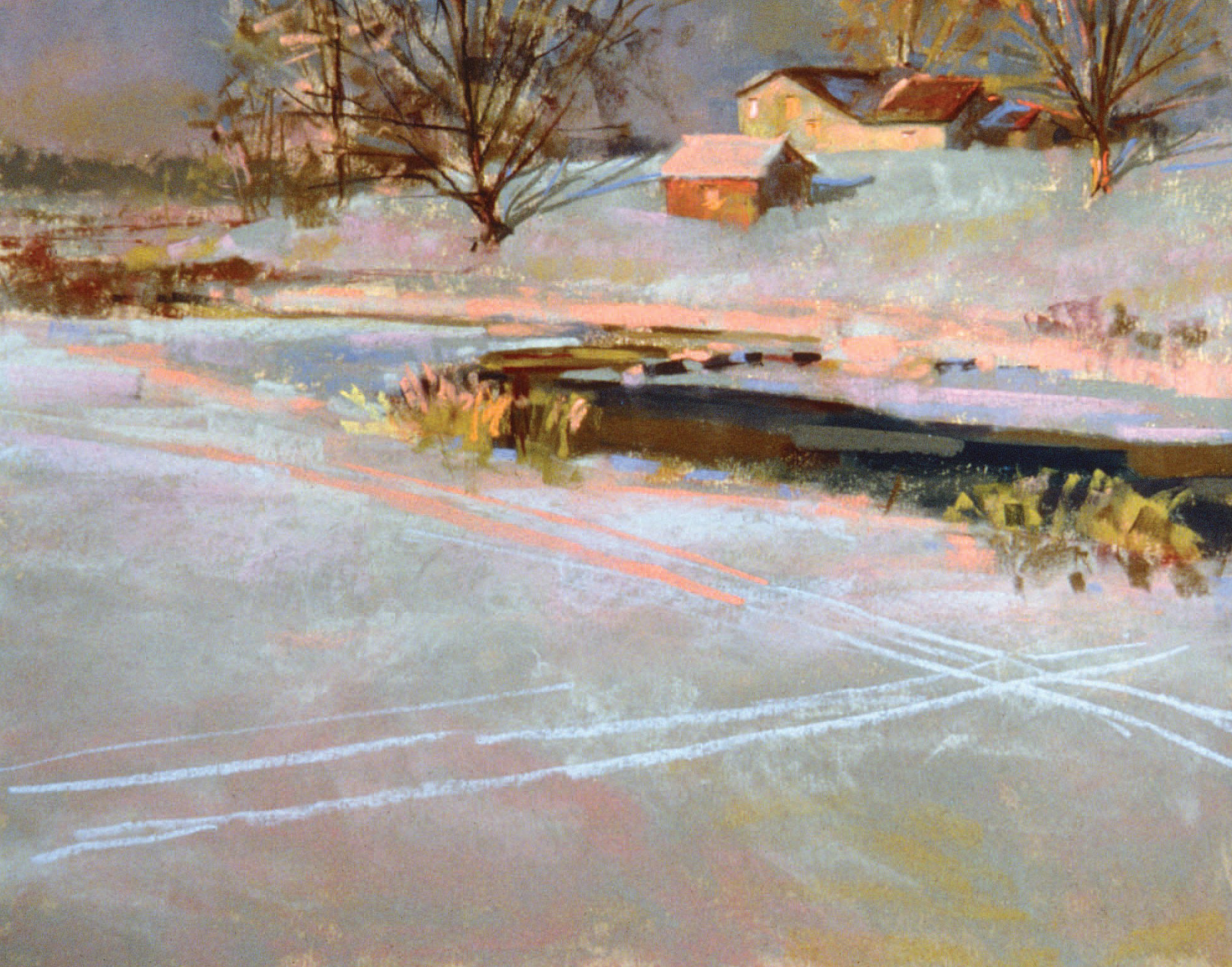
“Pump House Revisited” 9×12″
What has been the key to your growth as an artist?
By picking up on nature’s rhythms I find I can make sense of things and appreciate the beauty and goodness around me. Nature restores my soul and stirs my imagination. Working from life forces me to make my paintings more fluid, and to let go of polish. It allows me to produce rougher passages (dynamic incomple-tion) which seem more in sync with what I am seeing. These passages better express the restlessness and spontaneous movement I find in the natural world.
What part of your creative process do you find most fulfilling, and why?
The start of a new drawing or painting! I don’t come lightly to a blank paper or canvas… I come with appreciation and respect for those who have gone before me and what I am about to do.
It’s unlike anything else in my life I do. It’s not cooking or cleaning… It’s making art… I take it seriously; I just make sure not to take myself too seriously. I’m in “art-church,” and if I don’t feel I can attend, I go do some-thing else, maybe clean the house or bake a cake.
That’s interesting, because so many artists say that’s the most difficult thing, looking at that blank piece of paper.
Well, and they’re right, you know, in fairness. It can be extremely intimidating to look at a blank piece of paper and say, now what? But I think what I was driving at was more the idea that the blank piece of paper gives me a fresh start. Like a racing horse at the gate, I’m just itching to get into the race. I put everything out of my mind about what did or didn’t work in the past, and I just think, okay, this is a chance to see if I can’t really make this one the best one yet, you know.
It doesn’t happen all the time. I mean, particularly plein air painting, you know, every once in a while, you crash and burn. It’s just an ugly painting. You don’t show it to anybody, by the way.
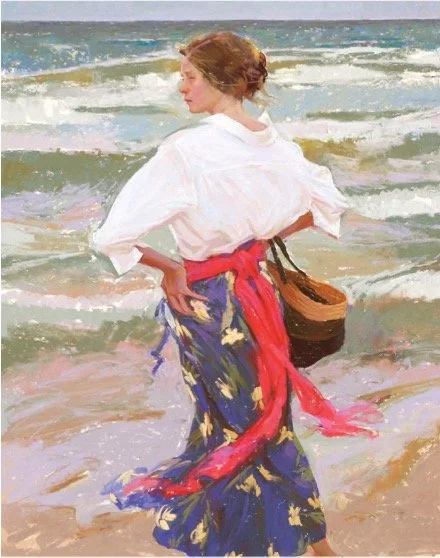
“Her face in the Wind” 20×16″
You don’t feel like you’re putting the pressure on yourself, approaching it that way?
I probably am. I’m sure, you know, that might again be part of going back to mom. She would drive us, me and my brothers. So maybe I’m a little bit driven… it’s an in-teresting thing. My nephew worked for me the summer he graduated high school as an assistant, in a little gallery I had in Romeo, Michigan.
He’s gone on to be involved in com-puter engineering and robotics—way ahead of everybody. University of Michigan graduate. Anyway, I re-member at the time, I used to drive him crazy because I was a perfec-tionist about stuff, and just 2 or 3 years ago, he was given an Execu-tive of the Year Award. I said, “I’m really proud of you, it’s amazing what you’ve done.” And he said, “Uncle Bill, you taught me, it was in the details. You drove me crazy, but I followed that.” And I think that’s what my mother did, and that’s probably why I’m a little bit driven about things, you know.
Can you describe a moment when you experienced a breakthrough with your technique?
I think it must have been when I discovered not to be timid when I work… I find it’s better to make a confident but imperfect mark than to be hesitant and overthink my actions. Uncertainty and fear are at the root of a lot of bad painting. When I was trying to learn and thinking step by step by step, the end product wasn’t as exciting to me. Sometimes, when I would just let go and… Shhst, (sweeping gesture) and I’d go, well, that’s much better. You know, it’s fresher, it’s cleaner, it’s more full of vitality and vibrance, and I just like that, you know. So I think that’s probably, how that came about.
Have you ever heard of the term impulse color? There’s a wonderful painter by the name of Walt Gonske who’s been widely recognized for his plein air paintings for years, he’s an oil painter. And I had an opportunity to visit with him. He said, every once in a while, why don’t you go over to that pastel box of yours when you’re in the middle of a painting without thinking, grab a color, impulsively, and slap it into the painting, and watch what happens.
And what happens for me when I do that, is two things. One, I’m breaking the rigidity of a regimen of step leads to step, leads to step. And two, it’s like in music, because I really think of painting and music as siblings—it changes the key you’re in. So your whole painting is going in one direction, in one key, and all of a sudden, you bring in this impulsive note, and exciting things hap-pen, you know.
That kind of thing has begun to be encouraging to me, because painting has become more and more about poetry—the feeling behind it. I’ve taken a great deal of influence from writers and music, as well as artists and art books.
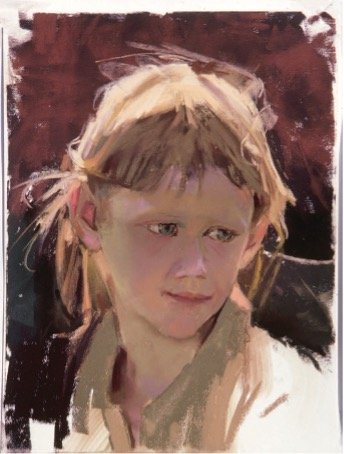
“Innocence” 14×11″
What’s the biggest challenge you have had to overcome to be a successful artist?
Keeping life at bay and learning it is okay to be alone with my work. Artists can be at their loneliest when among people, and at their most replete when alone with their work.
What themes or concepts tend to emerge most often in your work?
My work is like a diary, only, in pastels. My paintings are the pages of this visual diary… And light is my most reliable narrator. I am absolutely beguiled by the elusive moments expressed in light. I have a passion for natural light and the world in luminosity.
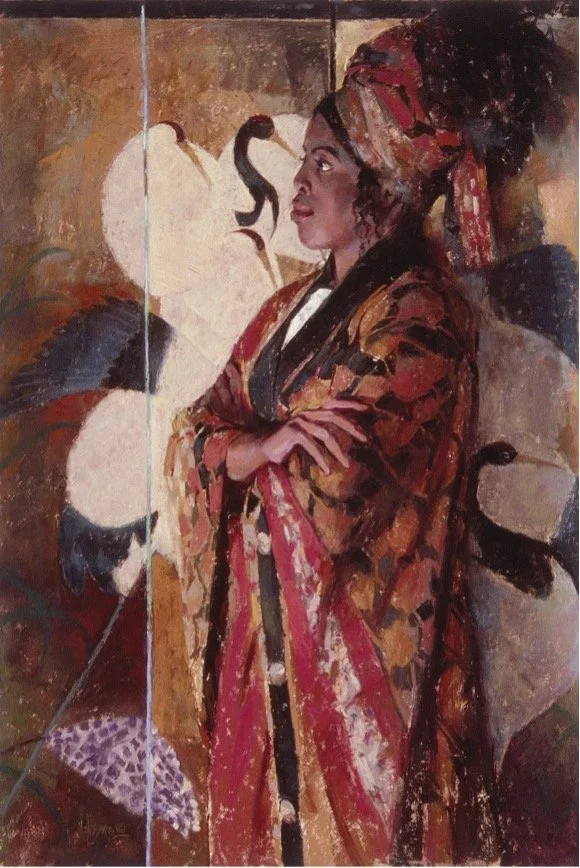
“Proud Heritage” 26×20″
Is there a specific ritual or routine you follow when starting a new project?
I am unorthodox when I work because of the way I learned representational painting. I simply try and get into the “zone” and win the painting over. As quickly as possible, I want to get one thing correct, that then sets the tone for the rest of the painting.
I base this idea on something I read about Hemingway. He said, what he would do when he was living in Paris is he would go to his place where he wrote and when he would start writing for the day, he tried to write one really good sentence. And if he could write one really good sentence, then he could write for the rest of the day. So then I said to myself, if I can find just one really good passage, you know, if I can just make one really good one, and I can’t tell you whether it starts at the center of interest, or I’m looking at something, and maybe I’m struggling, and all of a sudden, I see, oh,
I can make that work, and bam, I go right in, and I get that, and I try not to touch that for the rest of the painting. That then sets the tone for the whole rest of the painting. Just like Hemingway did with his one sentence.
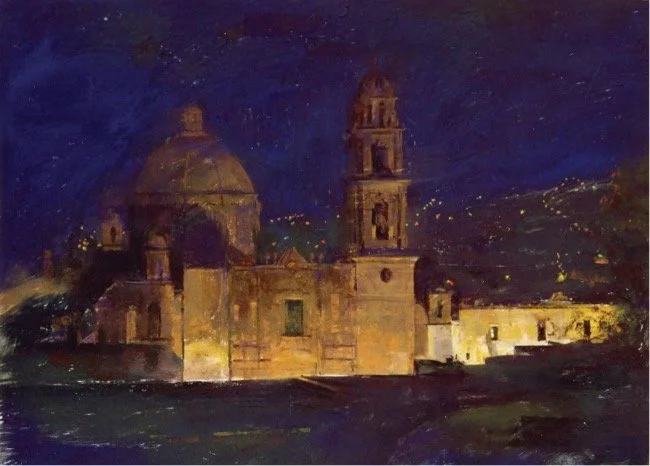
“San Miguel de Allende Nocturne” 11×14″
Have you ever experienced creative blocks, if so, what has helped you push through them?
The only creative block I can think of is life itself… I can become distracted and if I’m not careful the better part of the day can slip away. I have found that it is a good discipline to make art each day before anything else.
What kind of thing might surprise you as you work on a piece?
Try as I might to be in control of the work, it is the little accidents that err in the right direction that surprise and excite me. Here’s what I found when I first went out painting outdoors. I tended to want totake a photographic image and try to hold that image through the next 3 hours. What I found was there were a lot of things, when you’re working from life and out-doors with movement itself from wind and whatever, particularly if you paint people from life outdoors, there are things that might happen halfway through, or two-thirds of the way through, that If you were just going to hold on to this original image in your head, you were going to miss.
There was a painting that I made that won a top prize at a Pastel Society of America exhibition very early on, of a young woman hanging laundry on her mother’s line. I always know the people I paint. They’re not pro-fessional models, they are friends, daughters, whatever, so I have a personal connection. So, Allison was hanging this laundry. We started the painting about 4:00 or 5:00 in the afternoon. By about halfway through, so about 6–6.30, the sun had lowered just enough that it started to cast her shadow on the flowing sheet behind her. So, I just immediately put that in the painting, you know, just slapped that thing in. I didn’t think about it, I just expressed what was going on.
For years, people loved that painting, but what they loved the most was not the figure, but the shadow on the sheet. That’s why I say a plein air painting often sur-faces like a poem does from the words. As you develop the words, the narrative behind, or the poem, comes to life. So then I found that, it was very freeing, because then I realized I don’t have to copy what’s out there. I don’t even have to take a photographic image and make it impressionistic. I just have to paint the experience.
Something might happen right at the end, or it might happen in the middle, and then I put that in, and now that changes the composition or design. So I have to keep that composition and design fluid enough to be able to do that. If I had a preconceived design and said, I’m going to put this right here exactly, and this, this, and then this, this, and this, and then stuck to that, I don’t think that’s the right thing for open-air painting. I think if I was going to go back and work from photo-graphs as I did as an illustrator, that might be different. Because then everything is set, you know.
But then again, if I’d taken a photo of young Allison at 4 o’clock, I would have missed that shadow. I would have gone back and done the painting, and that shadow never would have been in the painting.
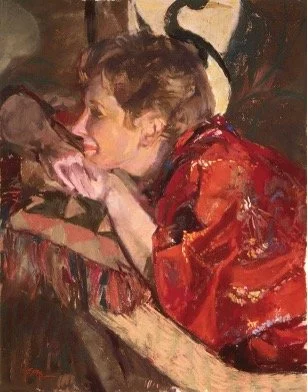
“Listening to his Story” 14×11″
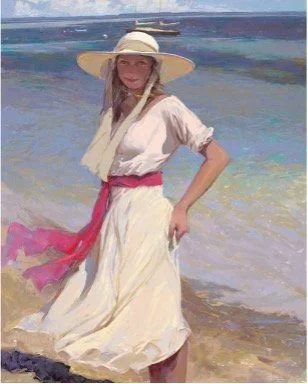
“Isabel” 40×32″
Has your work evolved over time, and if so, how would you describe that transformation?
I know I paint looser now, with greater confidence. Also, I’m more concerned with making things poetic, and less with technique. If I’m on my game, when I leave the field, I really can’t tell you what I have just done. Over the years painting has become increasingly intuitive, and less, and less cognitive.
My training as a representational artist has been a bit unorthodox. I learned to work representationally in the advertising art business. We used photos and projected them. We had different forms of projecting these photos right onto the surface that we were going to paint on. So that was how I learned to render things but that’s not the right way to learn drawing from life. That’s project-ing photos and learning how to render, but you still don’t know how to interpret three-dimensional informa-tion. You just know the craft of illustration, and you can be very good at that. I was very successful at it.
When I left commercial art, the first thing I realized was that I needed to learn how to interpret something that was three-dimensional at a certain point. I was going out and there were just things I couldn’t do. I couldn’t get them down in time, and I was bringing them back in and finishing them from photos. I was studying with Dan Gerhartz. He’s an oil painter. I said, you know, I think I’m stuck, and I’m thinking about putting my camera away for a year. I just know there’ll be things I can’t do at first. He said, “but at the end of the year, you’ll probably be able to do them.” I said, “I think it’s a good idea.”
Well, I never took my camera back out, because I was having too much fun. I love the challenge of being out there, fighting against the clock, fighting movement, fighting…not really…it used to be fighting it, now it’sincorporating it, but…. The unorthodoxy in my work is that I don’t have what I should have had, which was in
a classical training program, I would have had at least a year of drawing from life, 4, 5, 6 times a week with a model, and I never had that.
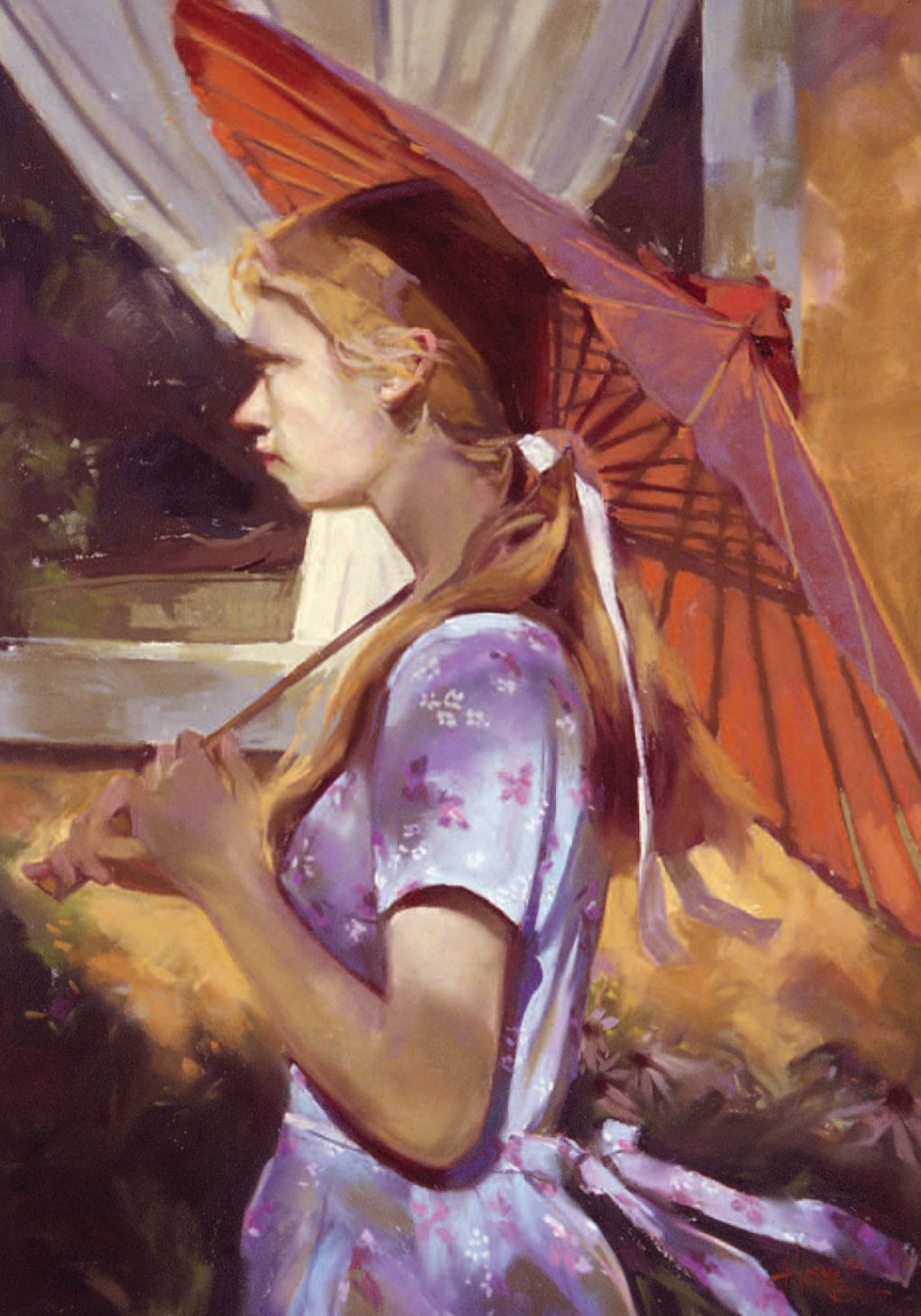
“Summer’s Nuance” 18×12″
But what I have learned, because I was an athlete, is how to compete, and I feel I compete with my paintings. Who’s gonna win? Is that painting gonna win, or am I gonna whip that painting into shape? And so, when I compete, with myself on that painting, I just have learned to win it over. Sometimes, I may have to win it over a number of times during the 3 hours. It’s a highly concentrated thing. I literally go out there and stand and whack away at that painting for 3 hours straight without stopping, without hardly doing anything but breathing. I come off the field a lot of times now just exhausted, you know. But I win it over. And once the painting is won over, and if I’m lucky and I win it over early enough, the rest of that time is sheer pleasure, sheer joy. I mean, I’m on a roll. It’s similar to an athletic competition where you’re winning, and everything’s going right, and you’re just having a great time playing the game. Yeah, that kind of thing. It’s very exciting for me.
It’s the one thing in my life different than anything else I do. Making art, you know. I mean, I love to cook. I don’t mind washing my car, I do all those kinds of things, but… painting art is, like…art church for me, you know? I go to church.
What role does storytelling play in your artwork? Do you begin with a narrative in mind?
I think every painting has a story in it. With plein air painting the idea behind the painting often arises, like a poem arises from words. I keep the painting fluid and open to change. Unfinished passages are used to express the restlessness of changing light and sponta-neous movement.
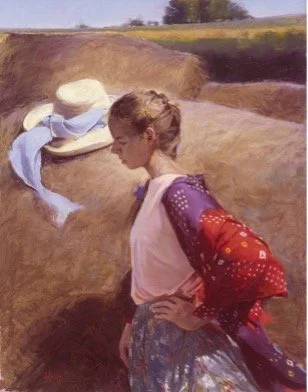
“Promises to Keep” 12×9″
Do you think about how you want your audi-ence to feel when they view with your work?
Yes… A painting can leave us with a feeling and trans-port us from where we are standing in front of the work to a place and time of the artist’s choosing. If 10 years later, it is the feeling that is remembered, then I was successful… To me that’s the magic in art! We artists are about things that cannot be said with words.
What is one technique or skill you have yet to master?
Drawing…though I doubt I ever will…. Very few have.
Do you feel a connection to any particular art movement or tradition?
I stand on the shoulders of so many wonderful artists: Vincent van Gogh, the French and American Impression-ists, for their use of color and expression, the Romantic Russian painters, Isaak Levitan for his lyrical landscapes, and Valentine Serov for his classical yet contemporary drawing and painting, as well as the Spanish painter Joaquin Sorolla for his abbreviation and luminosity. Also, Tom Thompson and the Canadian Group of Seven for their plein-air work. The work and thoughts of artists such as Käthe Kollwitz, Camille Claudel, Georgia O’Keefe, Mary Cassatt, Cecelia Beaux, and Berthe Morisot live in my artistic soul.
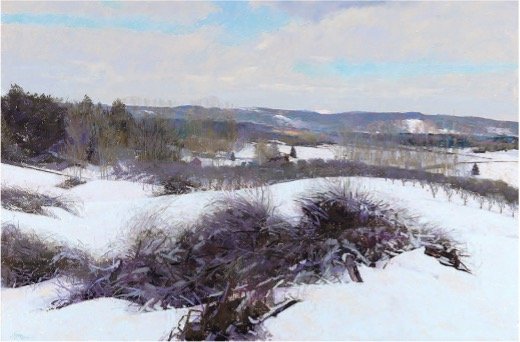
“Winter’s Trimmings” 24×36″
And I have been fortunate to study with three living artists who helped me beyond measure: Max Altekruse (Max studied under Frank Reilly at the Art Students’ League in NYC), Dan Gerhartz, and Harley Brown.
What has been one of your most rewarding experiences as an artist so far?
Without question, my portrait work at Children’s Hospi-tal in Detroit. (For 10 years Hosner spent one day per month drawing portraits of the young patients in their rooms and gifting the drawings to them and their families.)
If you could collaborate with any artist, dead or alive, who would it be and why?
It most likely would be Nicolai Fechin. His unbelievable knowledge of the human form and his ability to see it as movement through a flowing connectedness, makes him a true master.
What advice would you give to someone just starting out in the art world?
First decide if you are passionate enough about it. If you want to do it as badly as you want to breath, you’ll most likely succeed. Next decide how you want to measure your success.
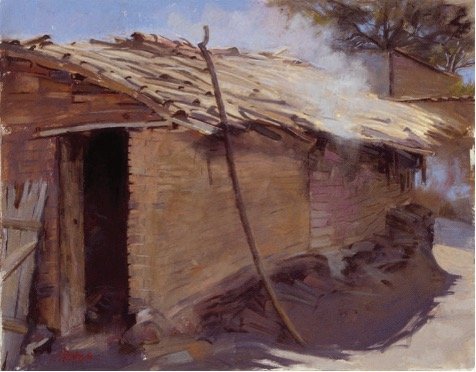
“Rodrigo’s House” 14×11″
What are the most important art books that you recommend?
There are so many good ones and if you make the choice your own, you will develop your own voice. There are two kinds of art books. One kind is mostly about approach, the other mostly about the art spirit. About approach, I would recommend: John Carlson’s Guide to Landscape Painting, and Robert Beverly Hale’s Master Class in Figure Painting. Concerning the art spirit, I would recommend van Goghs’ Dear Theo: Vincent vanGoghs Letters to His Brother, Robert Henri’s The Art Spirit, and Rainer Maria Rilke-Letters on Life edited and translated by Ulrich Baer.
Just as important to me has been the writing of Willa Cather. Cather’s ability to say the most with the least and paint with words is scary good. I feel the same way about the poetry of Edna St. Vincent Millay and her work makes my spirit leap.
With any influences, I have always sought not to copy the originators, but to seek what they sought, and then ask my own questions.
Who or what inspires you outside of the art world?
It is the people I meet in everyday life who inspire me the most, the ones who get up each day and often not feeling well, do most of the work in the world… They are my heroes. Like the children (and their families) whose portraits I drew at Children’s Hospital of Detroit. I have remarkable stories and life lessons from my time there.
How do you think the role of art has changed in society today compared to the past?
Art today, like many times in the past, is reinventing itself. Deeply affected by continuous influences of the information age and the new digital technologies, artists are once again searching their soul to understand what should be next. As AI “evolves,” art may need to “devolve” to retain the individual’s expression of the human spirit.
What do you collect?
Over the years I have acquired the art of several living and non-living artists for my own personal enjoyment. At times, in support of young artists, I have acquired their work too.
What would you want your legacy as an artist to be?
That people will find in my art the integrity and honesty I put into it, and the seriousness with which I worked, so that they might feel the love I have had for the people and places I have known.
I see skies of blue And clouds of white
The bright blessed day The dark sacred night…
The colors of the rainbow So pretty in the sky
Are also on the faces Of people going by…
And I think to myself What a wonderful world!
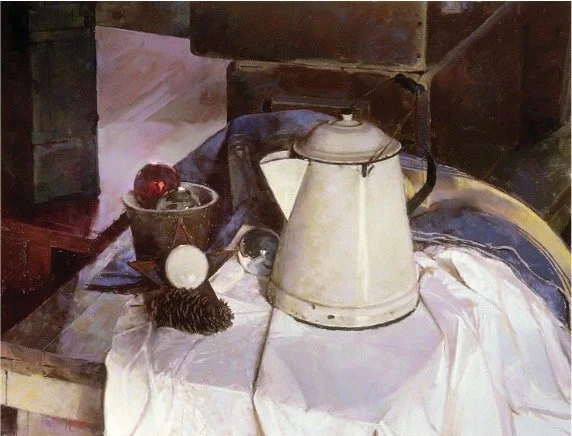
“Country Christmas” 20×26″
W. Truman Hosner is a Master Pastelist with the Pastel Society of America, Distinguished Pastelist in the Pastel Society of the West Coast, Maitre Pastelliste -Societé de Pastel de L’est du Canada, and has obtained Master’s Circle Gold Medal status with the International Association of Pastel Societies. He is a published art author and lecturer with over 50 years of experience as a working artist, and has taught workshops in the US, Taiwan, Spain, Canada, France and Mexico. Truman’s work has received many awards over the years, including the first Grand Prize in the Pastel Journal International Pastel 100 competition, First Prize from the French Pastel Society in Giverny, France, First Prize from the Pastel Society of America in New York City, and Best of Show from the Pastel Society of the West Coast. His paintings have been featured in national and international museum exhibitions and collections in New York City, California, Canada, France, Spain and Asia.