
Lougheed's Way
/A new exhibition at the Steamboat Art Museum celebrates the work of Robert Lougheed and those he influenced.
Western Art Collector
By John O’Hern
Robert Lougheed (1910-1982) advised, “…the best information is always in front of you,” and often said as he looked at the world around him, “Isn’t it wonderful!” An exclamation rather than a question.
Lougheed’s love of nature and its denizens, his direct experience of it and his ability to portray realistically the “emotional and spiritual qualities” of the experience in his paintings, have inspired two generations of artists of the American West as well as all who have seen his art.
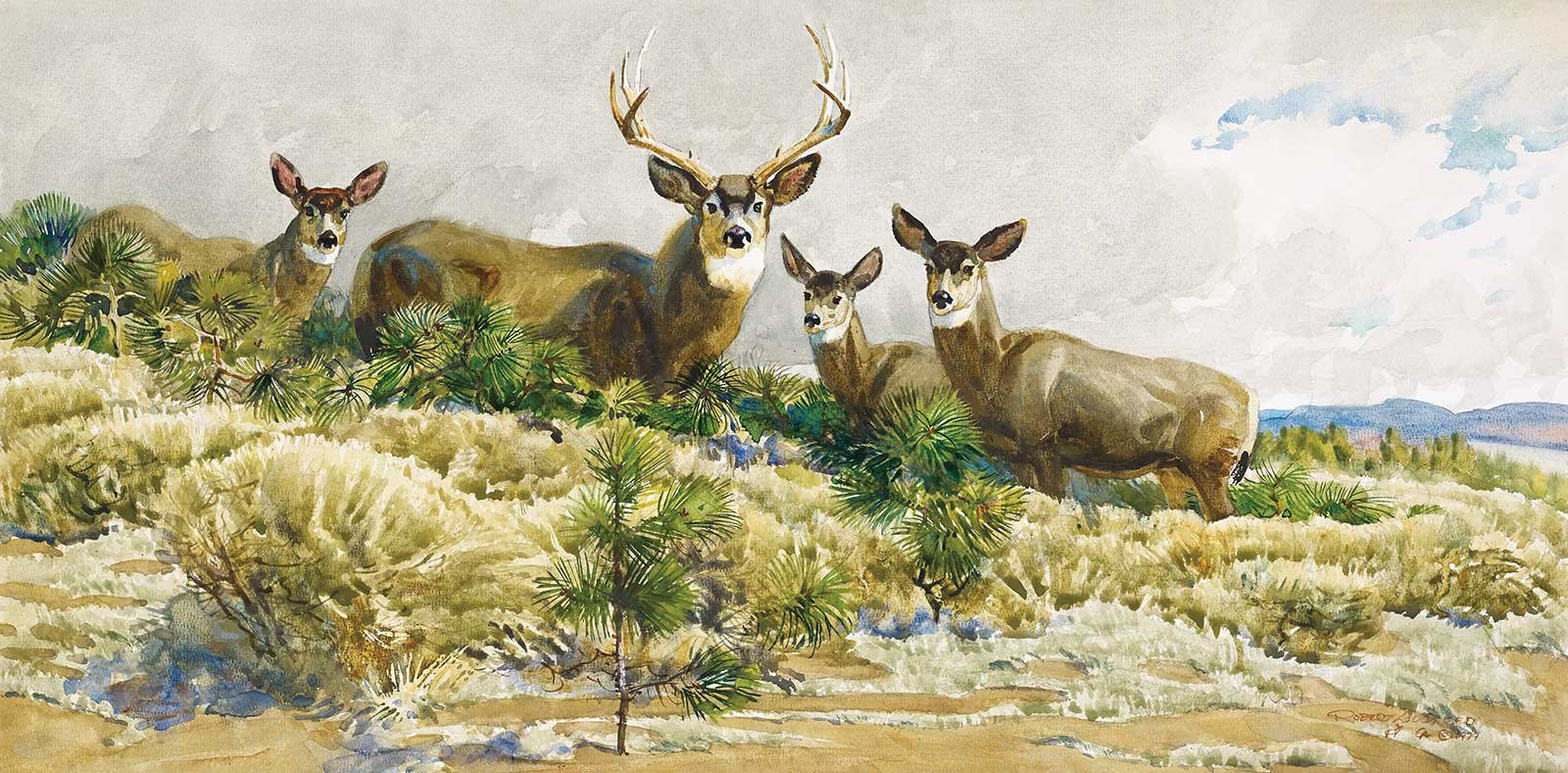
Robert Lougheed (1910-1982), Deer of the Kaibab, watercolor, 15 x 30 in.
Bill Rey—gallery owner, with his wife Maggie, of Claggett/Rey Gallery in Edwards, Colorado—writes, “Robert Lougheed was truly an artist’s artist. He was 100 percent committed to the creative process, in the field and in the studio. He selflessly mentored many artists and taught them how to observe and create from life. In many ways his students excelled beyond their mentor in ability and execution, evolving to a greater level of creativity and scale.”
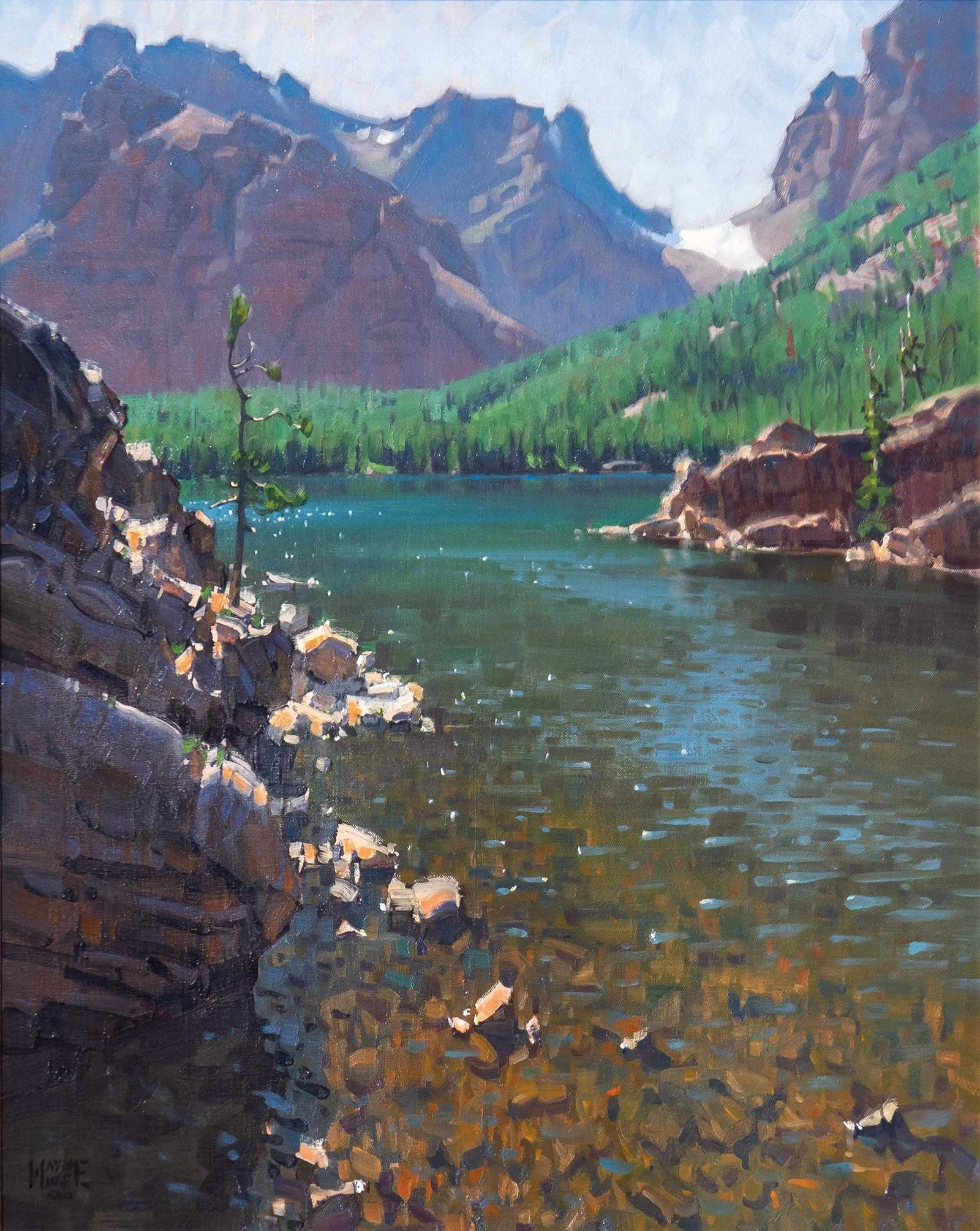
Wayne Wolfe, Loch Vale, oil, 39 x 33 in.
Rey has curated the exhibition Lighting the Way: Robert Lougheed and His Legacy at the Steamboat Art Museum in Steamboat Springs, Colorado, opening December 5 and continuing through April 11, 2026. The exhibition, the museum explains, “reunites two generations of artists profoundly shaped by Lougheed’s teaching—Randal Dutra, Dwayne Harty, John Moyers, Terri Moyers, Wayne Wolfe, Josh Elliott and Hannah Harper—each presenting both plein air studies and studio paintings alongside more than 60 of Lougheed’s own works. Together, their art tells the story of a legacy built on discipline, mentorship, and an abiding love of painting from life.”
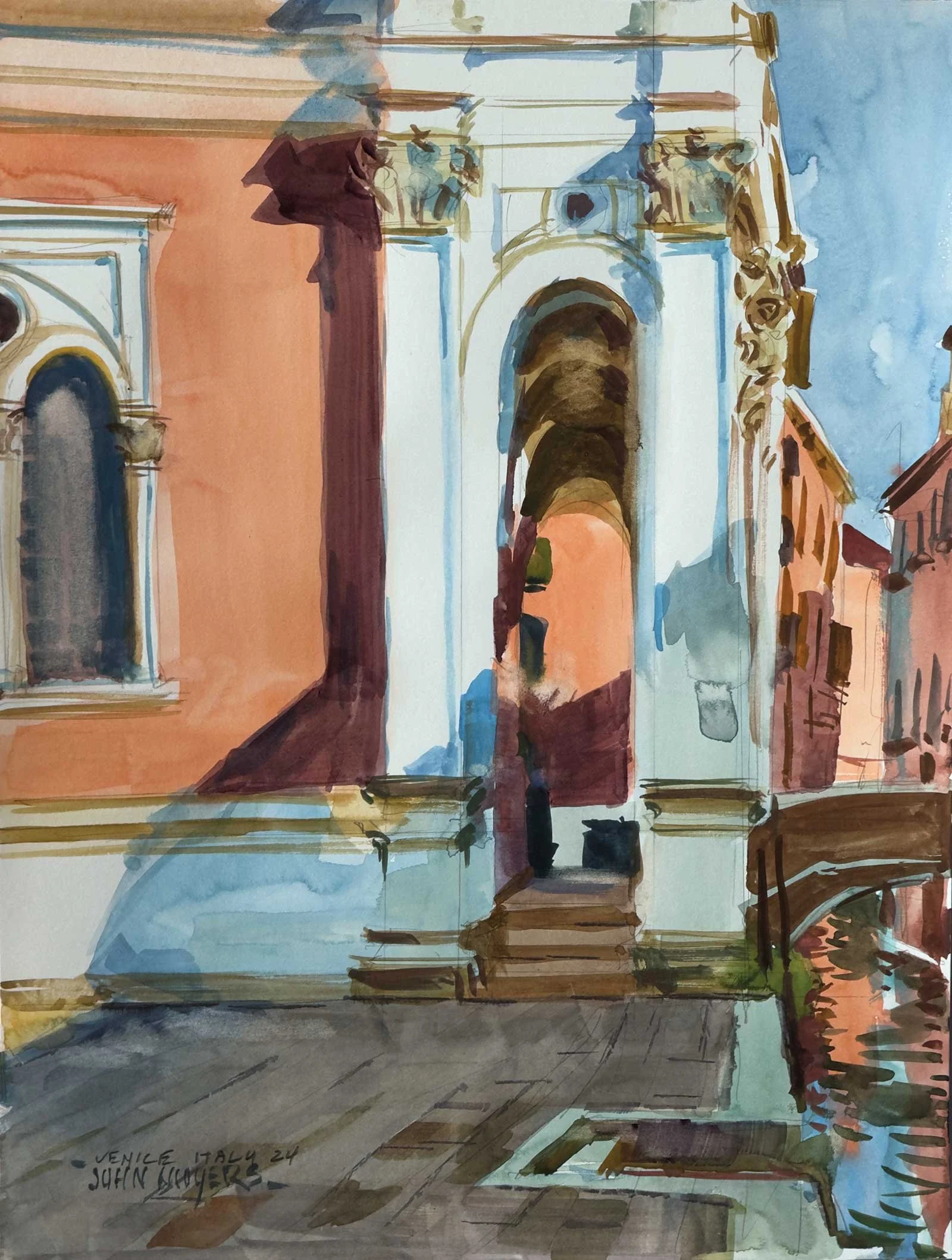
John Moyers, Scuola di San Rocco, watercolor, 16 x 12 in.
In 1978, Dutra was invited to study privately with Lougheed at his studio in Santa Fe, New Mexico. He comments on the basis for the lasting influence of early Western artists. “A lot of modern/‘new Western art’ being produced today has its firm visual roots in what has gone before almost 120-plus years ago. There has been a rediscovery or ‘renaissance’—Maynard Dixon, W. Herbert Dunton, etc. The reason for this is it was genuine. It was of their time. It was experienced first-hand by the artists themselves. The truth of their work lies in their having lived it,” Dutra says. “Their powerful, unique brand of visual expression is what has sustained and kept their works influential to the crop of artists of today. These giants remain a force.”
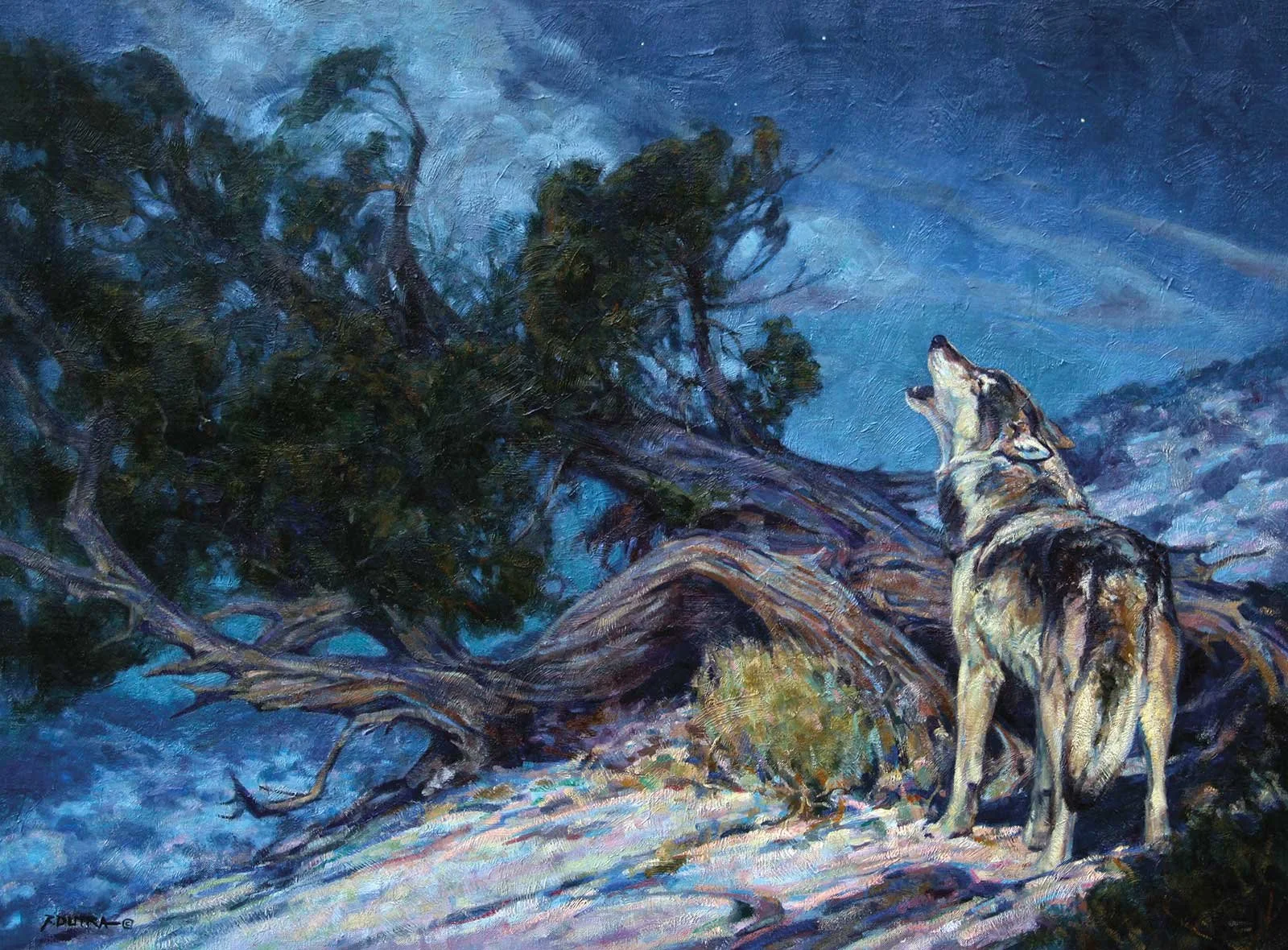
Randal Dutra, Song of the West, oil on Belgian linen, 30 x 40 in.
When I asked him about Lougheed’s influence on his observing nature and creating an image on canvas, Dutra replied, “In that regard, Robert Lougheed drilled into his students to ‘work from life. Paint what you know, because that will be what is lasting.’ Bob’s mentees are an extension of that philosophy. We select Lougheed students are a group not unlike past coteries that share collected experiences with others that we feel are significant and beautiful. Nature is our Holy Grail.”
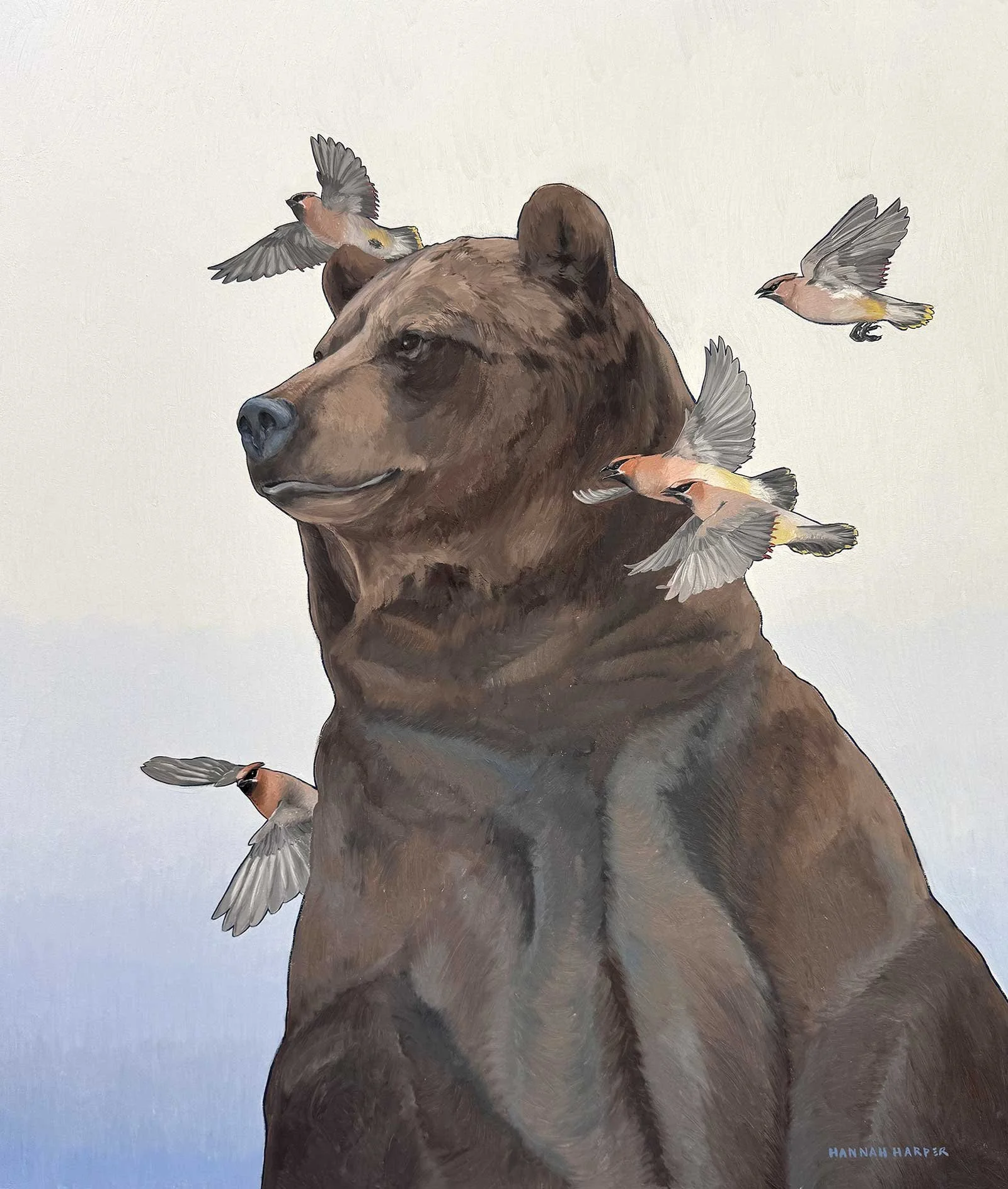
Hannah Harper, The Welcome Committee, oil on panel, 28 x 24 in.
Dutra began his formal art study at Okanagan Game Farm in British Columbia, Canada, with Lougheed and Clarence Tillenius. John Moyers studied at the Game Farm where he met his wife, Terri. From 2012 to 2017, Hannah Harper was studio apprentice for the Moyers.
Harper’s oil The Welcome Committee is typical of her paintings depicting animals in communion with the flora and fauna of their habitat. She says, “In my current work, it is my pursuit to portray wildlife as I saw them in my youth, with empathy and whimsy. My hope as a painter is to stir within the viewer a sense of child-like wonder towards wildlife, who possess feelings not dissimilar to our own.”
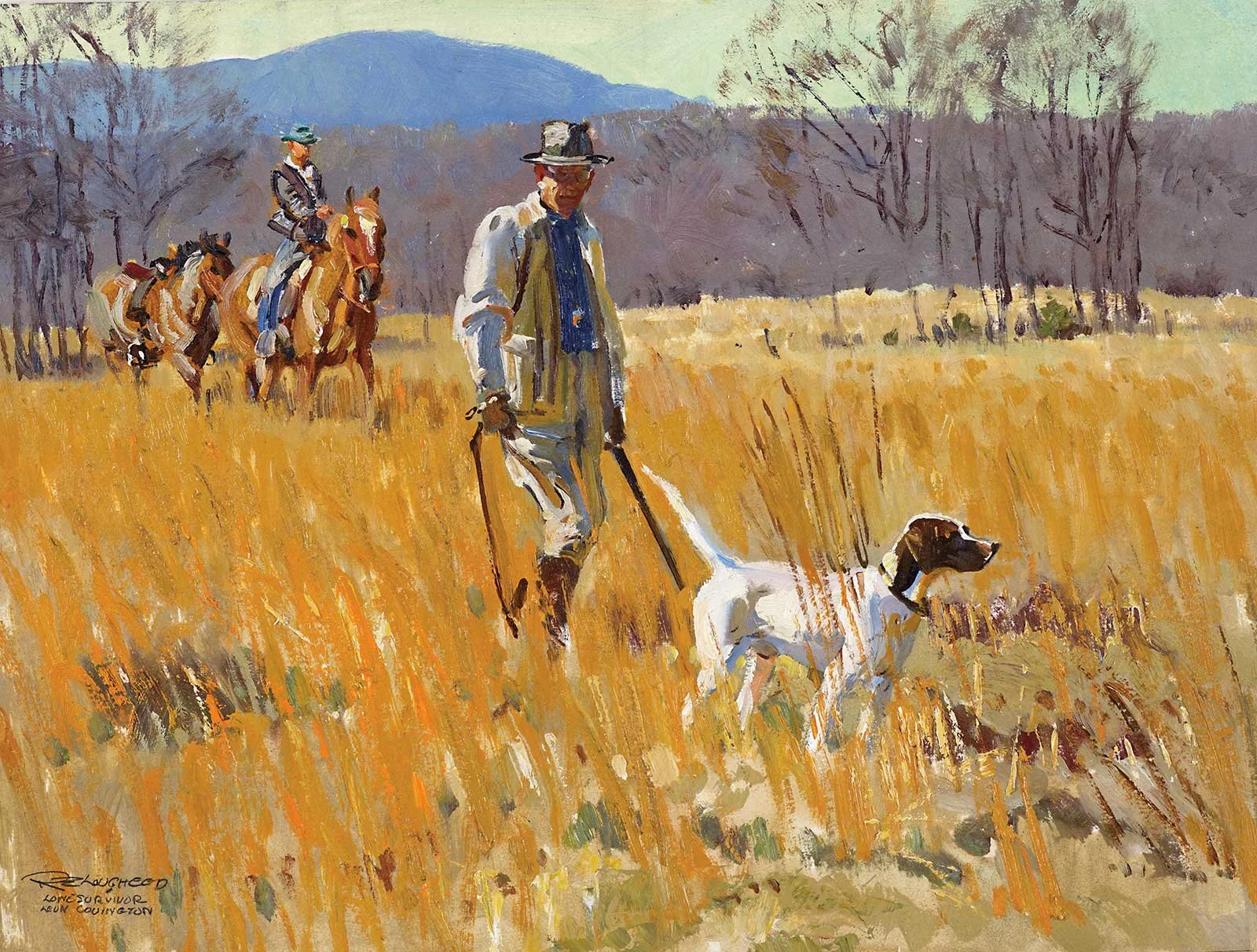
Robert Lougheed (1910-1982), Lone Survivor and Leon Covington, oil, 12 x 16 in.
Dutra also depicts the harmony of the natural world. “When painting nature, I always consider the environment and the animal/bird inseparable,” he says. “The creature is formed by its environment. There is something missing if they are not organically integrated. One cannot truly exist without the other. I work conceptually, presenting to the viewer the mystery and awe that is to be found in nature—Song of the West expresses my deep affection of the wilds.”
The howl of the wolf in Song of the West,becomes part of the wind of the desert which, at its most powerful, distorts the trees into surreal shapes.
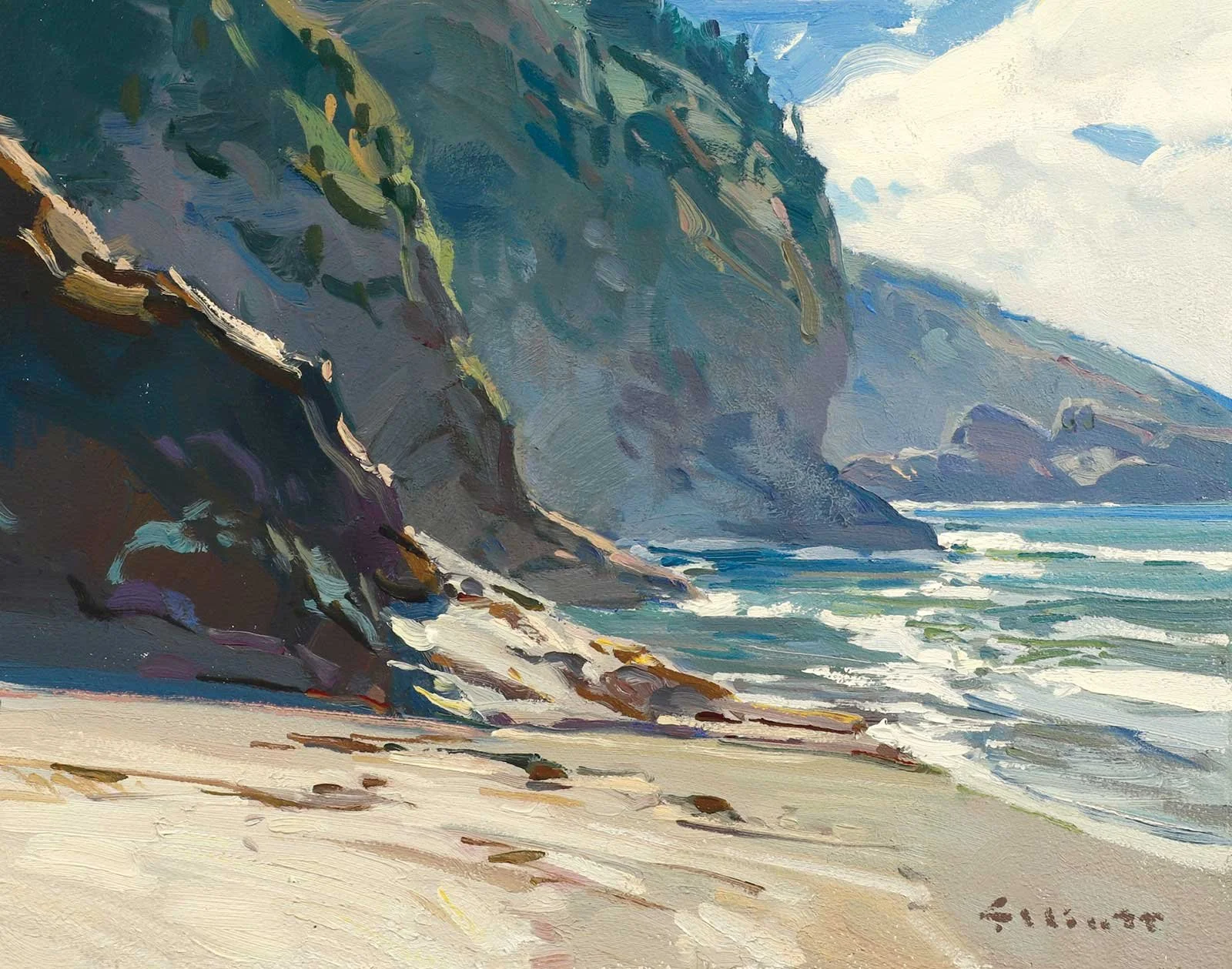
Josh Elliott, Cape Lookout Afternoon, oil, 8 x 10 in.
The essayist and nature writer Barry Lopez wrote about the song of wolves in his book, Of Wolves and Men. “The wolf in the middle begins to howl in response to the others. In chorus like this, each wolf chooses a different pitch. The production of harmonics…may create the impression of 15 or 20 wolves where there are in fact only three or four.”
Some of the work in the show will be for sale at the museum. —
Lighting the Way: Robert Lougheed and His Legacy
December 5, 2025-April 11, 2026
Steamboat Art Museum
807 Lincoln Avenue, Steamboat Springs, CO 80477
(970) 870-1755